

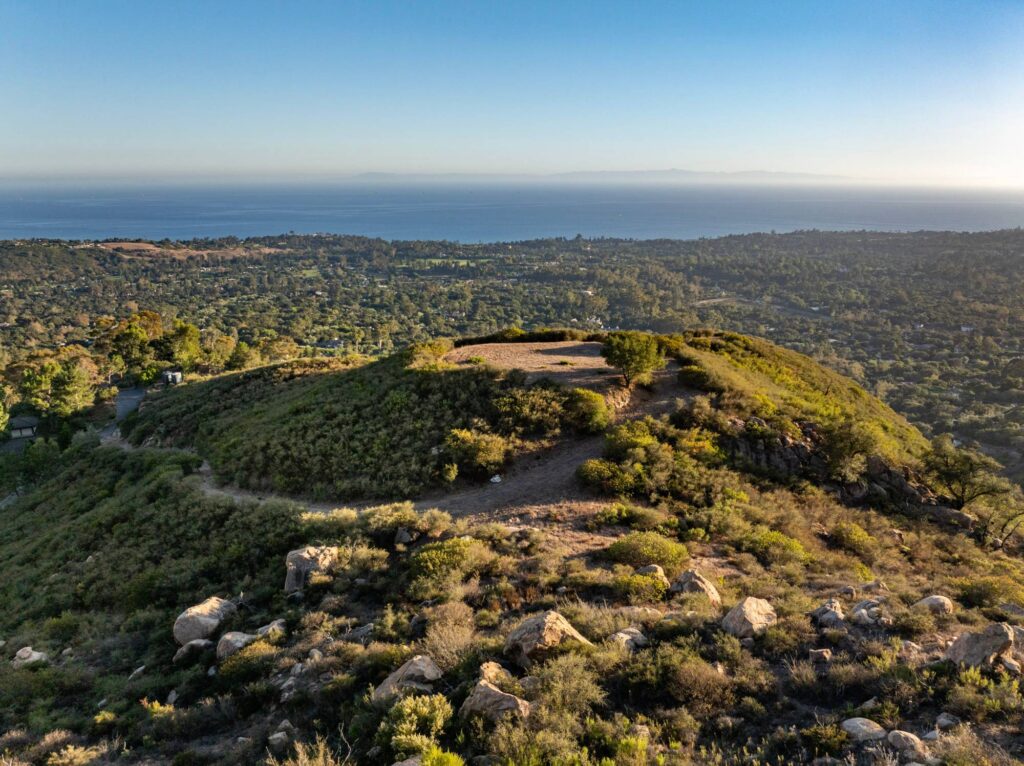
Some of the most valuable land in Santa Barbara County is valuable for two reasons at once: what you could build on it, and what it would mean to leave most of it alone. A conservation easement is the tool that lets an owner capture some of both. Here’s how conservation easements work, who they suit, what to watch out for, and why my listing at 917 Park Lane in Montecito is an unusually strong candidate.
What is a conservation easement?
A conservation easement is a voluntary legal agreement between a landowner and a qualified land trust or government agency that permanently limits how a property can be developed, in order to protect its conservation values: open space, scenic views, wildlife habitat, watershed, farmland or public trails.
- You keep ownership. The land stays yours. You can live on it, sell it or leave it to your heirs. The easement simply travels with the title.
- You decide what to keep. Easements are negotiated. Owners commonly reserve a building envelope for a home, guest house and barn, along with agricultural or equestrian uses, while giving up the right to subdivide or build elsewhere.
- It’s permanent. A conservation easement binds every future owner. The land trust monitors the property, usually once a year, to make sure the terms are followed.
What an easement can do for an owner
The value of an easement is the drop in the land’s fair market value caused by the restrictions, as determined by a qualified appraisal. That value can be donated, sold, or a mix of both.
- Federal income tax deduction. Donating a qualifying easement can be treated as a charitable gift. Under current federal rules, most individuals can deduct up to 50% of adjusted gross income in a year and carry any unused deduction forward for up to 15 years. Qualified farmers and ranchers (generally those who earn more than half their income from agriculture) can deduct up to 100% of AGI.
- Estate planning. Because the easement lowers the land’s value, it can reduce estate taxes and make it easier to keep family land in the family. Federal law also allows an additional estate tax exclusion for land under a qualifying conservation easement, within set limits.
- Cash from a sale. Some land trusts and public agencies buy easements outright, or pay part of the value in a “bargain sale” where the owner donates the rest. That can help offset the cost of buying or improving the property.
- Legacy. For many owners, the biggest benefit isn’t financial. It’s knowing the canyon, the views or the trails will look the same in a hundred years.
Tax rules change and every situation is different, so this is a conversation to have early with a CPA or tax attorney who works with conservation easements. California’s treatment can differ from federal treatment.
What makes land a good candidate
Not every property qualifies. Land trusts and the IRS look for real, documentable conservation value. The strongest candidates usually have:
- Significant natural land: large acreage of native habitat, steep canyons, riparian areas or watershed.
- Scenic open space visible from public roads, trails or the community.
- Public benefit, such as established public trails or a connection to adjoining protected land.
- Development rights worth retiring. The more the land could otherwise be developed, the more an easement is worth.
- A willing partner. A land trust that sees the property as a priority and has the capacity to hold and monitor the easement.
What to know before you start
- It takes time. Plan on months, not weeks. A baseline study of the property, title work and negotiation with the land trust all come first.
- There are costs. Expect a qualified appraisal, legal fees, a baseline documentation report and, usually, a stewardship contribution to the land trust for future monitoring.
- The IRS looks closely. Easement deductions are audited more than most, so the appraisal and paperwork have to be done right. Stay away from marketed “syndicated” easement investments, which the IRS treats as abusive and federal law now limits.
- Lenders must agree. If the property has a mortgage, the lender usually has to subordinate to the easement.
- Get the reserved rights right. Think carefully about where future buildings, roads, water and agricultural uses go before the terms become permanent.
Featured listing: 917 Park Lane, Montecito

917 Park Lane is approximately 239.51 acres above Park Lane in Montecito, offered at $21,350,000. It’s a rare legacy property that combines a world-class homesite with a large area of natural land, which is the classic profile of a conservation easement candidate.
- One extraordinary homesite. A private hilltop view site, reached by deeded easement, with panoramic ocean, island, mountain and canyon views and room for a premier Montecito estate.
- A lot of natural land. Much of the remaining acreage is natural and steep, the kind of open space land trusts value for habitat, watershed and scenery.
- Public trails. The property is crossed by well-known local trail corridors, including the Romero Canyon and Buena Vista trail systems, with the Edison Catway connecting toward Romero and San Ysidro. Public recreation is one of the conservation purposes an easement can protect.
- Scenic value. The hillside sits above Montecito and is part of the open-space backdrop the community sees every day.
That creates a dual opportunity. A buyer could build one exceptional estate on the view site and explore a conservation easement, a partial preservation structure or a partnership with a conservation organization for the balance of the land. Depending on the terms and the appraisal, that could offset part of the investment while preserving the property’s open-space character for good.
It’s well suited to a conservation-minded buyer, a philanthropic land steward, or an end-user or spec builder who wants a signature Montecito estate with a lasting legacy. Any easement would be up to the buyer to pursue and would depend on a land trust’s interest, an appraisal and the buyer’s tax situation. I’m glad to help you start those conversations early, before you buy.
Thinking about an easement on your own land?
Whether you’re buying land with conservation in mind or own a ranch you’d like to protect, the best results come from bringing the right people in early: a land trust, a qualified appraiser, and a tax advisor who knows easements. I work with ranch and land owners across Santa Barbara, San Luis Obispo and Ventura Counties and can help you think through how an easement would affect value, marketability and your long-term plans. Call me at (805) 252-9267.
This article is general information, not tax or legal advice. Consult a qualified tax professional and attorney about your situation. Listing information is deemed reliable but not guaranteed and is subject to change.
Common questions
What is a conservation easement?
A conservation easement is a voluntary, permanent legal agreement between a landowner and a qualified land trust or government agency that limits development on a property to protect its conservation values, such as open space, habitat, scenic views or public trails. The owner keeps ownership and can still sell or pass on the land.
Can I still build a home on land with a conservation easement?
Often, yes. Owners commonly reserve a building envelope for a home and related structures while giving up the right to subdivide or build elsewhere. The details are negotiated with the land trust before the easement is recorded.
How is the tax deduction for a conservation easement calculated?
The deduction is based on how much the easement reduces the land’s fair market value, as shown by a qualified appraisal. Under current federal rules, most individuals can deduct up to 50% of adjusted gross income per year with a 15-year carryforward, and qualified farmers and ranchers up to 100%. Consult a tax professional for your situation.
Is 917 Park Lane in Montecito already under a conservation easement?
The listing presents a conservation easement, partial preservation or partnership with a conservation organization as an option for a future owner to explore for the land beyond the hilltop homesite. Contact Jody Neal at (805) 252-9267 for details.
Who can help me set up a conservation easement in Santa Barbara County?
Start with a land trust that works in your area, a qualified appraiser and a tax advisor experienced with easements. Jody Neal, a ranch and land specialist with Berkshire Hathaway HomeServices California Properties, can help landowners and buyers think through how an easement affects value and marketability.